
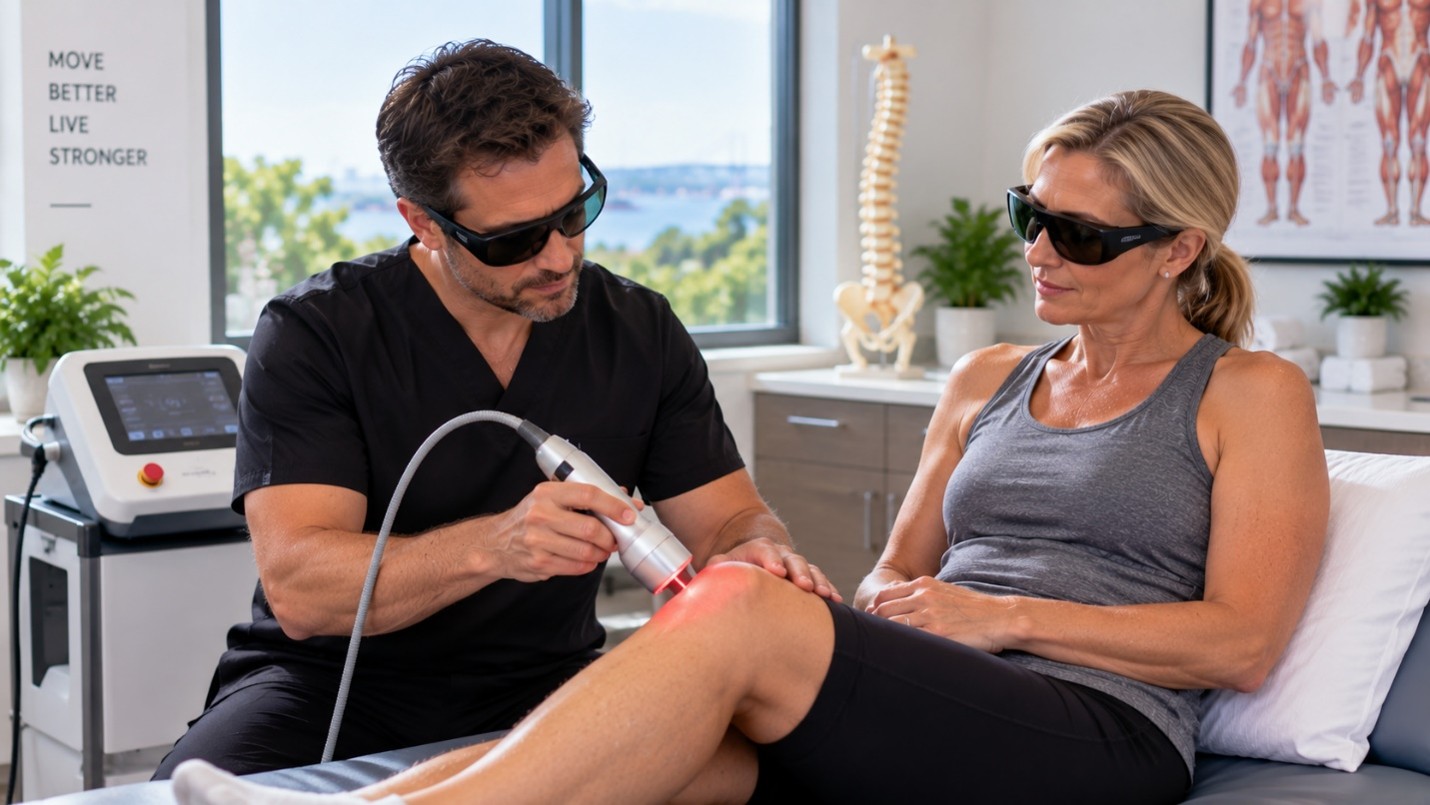
Medical-grade laser therapy uses photobiomodulation to stimulate cellular repair, increase blood flow, and calm inflammation without drugs, needles, or downtime. Trident Wellness Solutions at Coastal Regen in Chesapeake offers laser therapy alone or alongside regenerative joint care for patients throughout Hampton Roads.
What Is Medical-Grade Laser Therapy?
Medical-grade laser therapy is a non-invasive, drug-free treatment that uses photobiomodulation to stimulate cellular regeneration, increase blood flow, and reduce inflammation deep within tissue. Offered through Trident Wellness Solutions in Chesapeake, it is commonly used for arthritis, neuropathy, tendonitis, and soft tissue injuries, and is often combined with regenerative joint injections for a complete, Nurse Practitioner-guided pain management plan.
How Does Laser Therapy Work?
Through a process called photobiomodulation, the laser delivers specific wavelengths of light deep into tissue. This stimulates cellular regeneration, increases local blood flow, accelerates tissue repair, calms inflammation, and triggers the natural release of endorphins that support pain relief. Unlike heat or ultrasound therapy, laser light penetrates without generating significant surface heat, allowing energy to reach deeper structures comfortably.
What Conditions Does Laser Therapy Help With?
- Arthritis-related joint pain and stiffness
- Peripheral neuropathy and nerve-related discomfort
- Tendonitis and repetitive strain injuries
- Plantar fasciitis and heel pain
- Soft tissue injuries and post-surgical recovery
- Chronic back, hip, and shoulder pain
Does Laser Therapy Hurt?
Laser therapy is painless. Most patients describe a gentle warmth at the treatment site rather than any discomfort. Sessions typically last between five and twenty minutes depending on the area and condition being treated, and there is no downtime, so patients return to work, exercise, or errands right away.
How Many Laser Therapy Sessions Do You Need in Chesapeake?
Session frequency depends on the condition being treated. Acute injuries often call for two to three sessions per week for several weeks, while chronic issues may shift to a weekly or biweekly maintenance schedule once symptoms improve. Your Nurse Practitioner will provide a written schedule with specific session counts and goals so you know what progress to expect and when.
What Results Can You Expect From Laser Therapy?
With consistent sessions, many patients notice improved mobility, less swelling, a faster return to activity, and longer-lasting comfort. As with any therapy, individual results can vary, and your provider will help set realistic expectations based on your specific condition and history.
The Science Behind Photobiomodulation
Photobiomodulation works by delivering specific wavelengths of red and near-infrared light that are absorbed by mitochondria, the energy-producing structures within cells. This absorption is thought to increase cellular energy production, which supports the processes involved in tissue repair, reduced inflammation, and improved local circulation. Because the light penetrates without generating significant surface heat, it can reach structures like tendons, ligaments, and deeper muscle tissue that surface-level heat packs cannot effectively influence.
This mechanism is part of why laser therapy is used across such a wide range of conditions, from arthritis and neuropathy to tendonitis and post-surgical recovery. The underlying goal in each case is the same: support the tissue’s own repair and anti-inflammatory processes rather than simply masking discomfort.
Laser Therapy vs. Other Non-Invasive Pain Options
Compared to heat packs, ultrasound therapy, or over-the-counter anti-inflammatory medication, laser therapy offers deeper tissue penetration without medication side effects or the temporary relief that surface heat typically provides. It is not a replacement for every pain management tool, and it is often used as one piece of a broader plan that may include regenerative injections, bracing, or wellness support, rather than as a standalone solution for every patient.
What Should I Expect at My First Laser Therapy Visit?
Your first visit includes a review of your pain history, the specific area or areas involved, and any prior treatments you have tried. Your Nurse Practitioner will explain how many sessions are typically recommended for your condition, what results are realistic, and how laser therapy fits alongside any other treatment you may already be receiving. The laser applicator is moved across the treatment area during the session, and most patients find the experience relaxing rather than uncomfortable.
You will not need to change into a gown or prepare in any special way beforehand, and you can drive yourself home or return directly to work once the session ends. Many patients schedule their laser therapy sessions on the same day as a wellness visit or follow-up appointment to make the most of their trip to our Chesapeake office.
Building a Long-Term Pain Management Plan With Laser Therapy
For patients managing a chronic condition such as arthritis or neuropathy, laser therapy often works best as part of an ongoing maintenance plan rather than a one-time fix. After an initial series addresses the acute flare, many patients shift to periodic maintenance sessions to help sustain improved mobility and comfort over the following months, adjusting frequency based on how their symptoms respond over time.
Your Nurse Practitioner will periodically reassess your progress and adjust your plan, whether that means spacing sessions further apart as symptoms improve, adding a regenerative or wellness therapy to address an underlying cause, or continuing a steady maintenance schedule for a chronic condition that responds well to ongoing care. The goal at every stage is a plan that fits your actual results, not a fixed schedule that never changes regardless of how you respond.
Laser Therapy Alongside Regenerative Joint Injections
Laser therapy pairs well with PRP and other regenerative treatments, often used before an injection to calm inflammation or afterward to support recovery and tissue healing. Combining these approaches allows patients to address both the acute discomfort and the underlying joint or tendon damage driving it.
Who Is a Good Candidate for Laser Therapy?
Laser therapy at our Chesapeake clinic is administered by a board-certified Nurse Practitioner and is generally appropriate for adults who want to recover faster, reduce inflammation, and protect the active life they have built. Patients should always discuss new therapies with their provider, especially if they are pregnant, taking prescription medications, managing a chronic condition, or recovering from a recent procedure.
Will Insurance Cover Laser Therapy?
Coverage varies by plan, and elective laser therapy is typically self-pay. Our front desk team checks your benefits and explains what is and is not covered before any service is scheduled, and we offer transparent, written package pricing so you can plan your budget without surprises.
How Laser Therapy Fits Into a Busy Hampton Roads Schedule
Because sessions are quick, painless, and require no recovery time, laser therapy is a practical option for active retirees, Navy spouses, busy professionals, and weekend athletes throughout Chesapeake, Virginia Beach, and Norfolk who want relief without disrupting a demanding schedule. Many patients schedule sessions around lunch breaks or errands, since there is no need to arrange time off work or plan for downtime afterward.
What Makes Laser Therapy Different From At-Home Devices?
Consumer red-light devices sold for home use typically operate at lower power levels than medical-grade equipment, which affects how deeply the light can penetrate tissue and how consistently a treatment area is covered. In-office laser therapy, administered by a Nurse Practitioner who can tailor wavelength, dosage, and treatment area to your specific condition, is designed to deliver a more targeted and consistent therapeutic effect than a general-purpose home device.
Can Laser Therapy Help Neuropathy Specifically?
Peripheral neuropathy, often felt as tingling, numbness, or burning discomfort in the hands or feet, is one of the conditions patients most frequently ask about. Laser therapy’s effect on local circulation and cellular activity is part of why it is included in neuropathy care plans, though results and timelines vary depending on the underlying cause and severity of nerve involvement. Your Nurse Practitioner will discuss realistic expectations based on your specific neuropathy history and any other conditions, such as diabetes, that may be contributing to your symptoms.
Common Questions Before Your First Session
- Do I need a referral for laser therapy? No, you can schedule a consultation directly with our team.
- What should I wear to my appointment? Loose, comfortable clothing that allows easy access to the treatment area works best.
- Can I combine laser therapy with a regenerative injection the same day? Your Nurse Practitioner will let you know what sequencing makes sense for your visit.
- Is laser therapy safe for older adults? It is generally well tolerated across age groups, though your provider will review your full health history first.
Medical Laser Therapy Serving Chesapeake, Virginia Beach, and Norfolk
Coastal Regen and Trident Wellness Solutions serve patients throughout Hampton Roads, including Virginia Beach and Norfolk, plus Moyock and Elizabeth City in northeastern North Carolina. To explore our full treatment menu, meet our Nurse Practitioner, or schedule a laser therapy visit, contact our team today.