
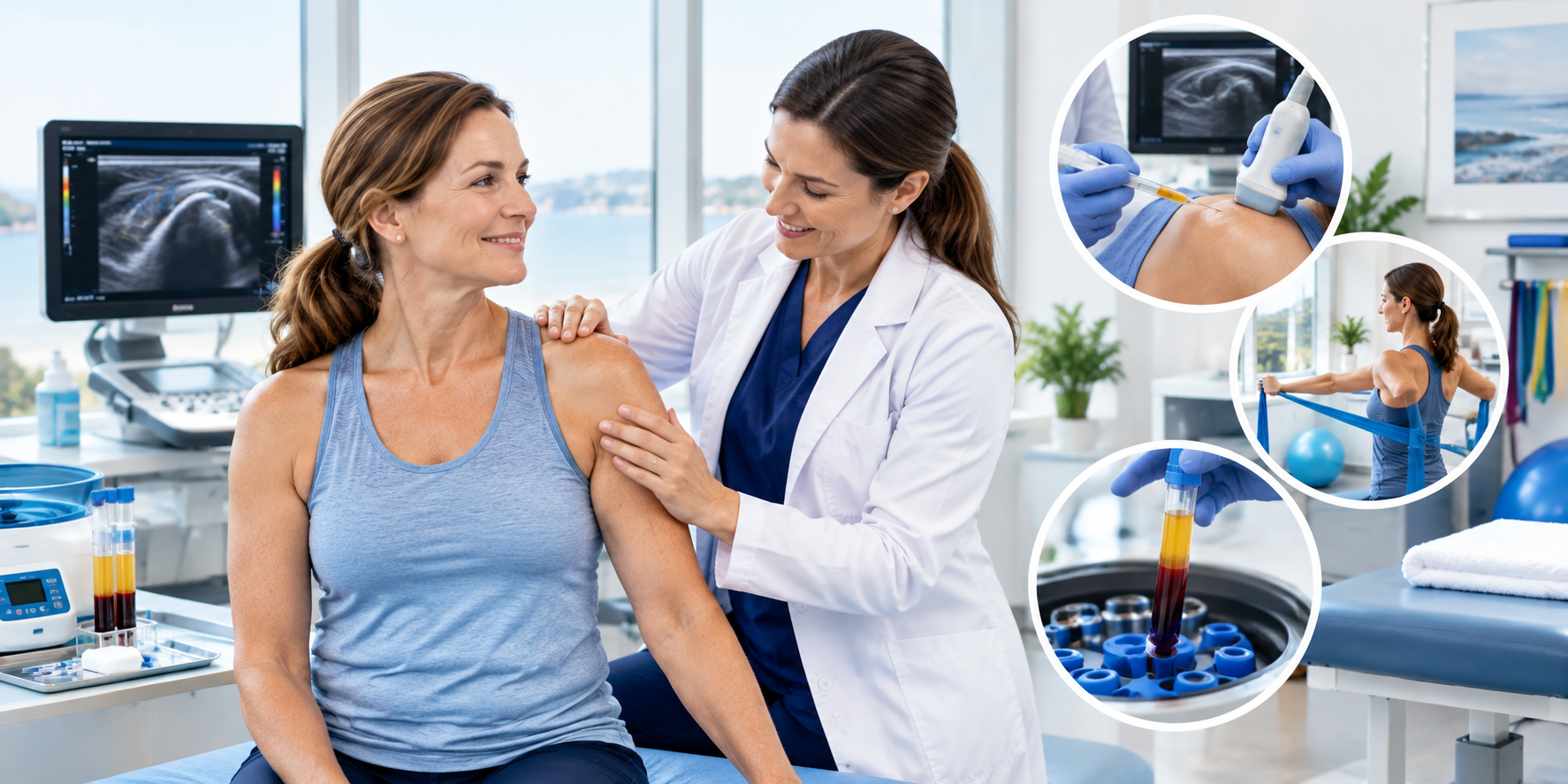
Many rotator cuff injuries, including tendinitis, impingement and partial tears, can be treated without surgery. Effective non-surgical rotator cuff treatment includes PRP injections, targeted physical therapy, medical laser therapy and activity changes that reduce strain on the shoulder. At our regenerative medicine clinic in Chesapeake, VA, image-guided PRP injections and laser therapy help patients from Virginia Beach and Norfolk relieve shoulder pain and restore movement.
What Is a Rotator Cuff Injury?
The rotator cuff is a group of four muscles and tendons that hold the top of the arm bone in the shoulder socket and let you lift and rotate your arm. Injuries range from inflammation, called tendinitis, to tendon fraying and partial or full-thickness tears. They are among the most common causes of shoulder pain in adults, especially after age 40, and in people who lift, reach overhead or play sports such as golf, tennis and swimming.
Common Rotator Cuff Injury Symptoms
- Dull, deep ache in the shoulder that may spread down the upper arm
- Pain when reaching overhead, behind your back or lifting objects
- Pain at night, especially when lying on the affected side
- Weakness when raising or rotating the arm, or trouble with daily tasks such as dressing and combing your hair
- Clicking, catching or limited range of motion
Can a Rotator Cuff Tear Heal Without Surgery?
Many can improve without surgery. Tendinitis, impingement and most partial-thickness tears often respond well to non-surgical care, and many people with degenerative full-thickness tears also regain comfortable function. Surgery is more likely to be recommended for large acute tears from a fall or injury, especially in younger, active adults, or when weakness keeps getting worse. Early evaluation matters, because treating a small tear before it progresses gives you the best chance of avoiding surgery.
Non-Surgical Rotator Cuff Treatment Options
PRP Injections for Rotator Cuff Injuries
Platelet-rich plasma delivers concentrated growth factors directly to the damaged tendon under image guidance. PRP aims to support tendon healing and reduce chronic inflammation, which is why it is a popular option for partial tears and chronic tendinopathy that have not responded to rest and therapy.
Medical Laser Therapy
Medical laser therapy uses light energy to reduce inflammation, increase circulation and ease pain in the shoulder. It is drug-free and comfortable. Read more in our laser therapy for chronic pain guide.
Anti-Inflammatory and Trigger Point Injections
For short-term relief of muscle knots and inflamed tissue around the shoulder, targeted injections can calm pain so you can participate in rehab. Learn more about trigger point and anti-inflammatory injections.
Physical Therapy and Home Exercise
Strengthening the rotator cuff and shoulder blade muscles improves joint stability and takes pressure off the injured tendon. Consistent, guided exercise is a core part of every non-surgical plan, and gentle stretching helps prevent a stiff, frozen shoulder while the tendon heals.
Activity Changes and Recovery Support
Short-term changes, such as avoiding heavy overhead lifting and adjusting your sleep position, give the tendon space to heal. IV therapy and supplements can support overall recovery.
How Long Does Rotator Cuff Recovery Take Without Surgery?
Most patients feel meaningful improvement within six to twelve weeks of starting a combined plan. After PRP, tendons typically respond over six to eight weeks, with continued gains over three to six months. See our PRP recovery timeline for details.
Shoulder Pain Treatment Near Virginia Beach, Norfolk and Moyock
Coastal Regen is in the Greenbrier area of Chesapeake and serves Virginia Beach, Norfolk, Portsmouth, Suffolk, Moyock and Elizabeth City. Many of our patients are active duty sailors, veterans and military families whose shoulders take a beating. We are in-network with TRICARE. Schedule a shoulder consultation or call 757-297-6750
Rotator Cuff Treatment Without Surgery: Frequently Asked Questions
Can a torn rotator cuff heal on its own?
A torn tendon does not fully reattach on its own, but many partial tears and degenerative tears become pain-free and functional with non-surgical care. Strengthening the surrounding muscles, reducing inflammation and supporting the tendon with treatments like PRP can restore comfortable everyday use of the shoulder.
Is PRP effective for rotator cuff tears?
PRP is a well-studied option for rotator cuff tendinopathy and partial tears. Research suggests it may reduce pain and improve shoulder function, especially when combined with physical therapy. Results vary by tear size and tissue quality, so a full evaluation and imaging review come first.
How do I know if my rotator cuff is torn or just inflamed?
Both can cause pain with overhead movement and at night. A tear is more likely if you have noticeable weakness lifting your arm, pain after a fall or a sudden pop. A physical exam and imaging, such as ultrasound or MRI, are the best ways to tell the difference..
What should I avoid with a rotator cuff injury?
Avoid heavy overhead lifting, sudden reaching, pushups, overhead presses and sleeping on the injured shoulder. Also avoid complete immobilization, since a frozen, stiff shoulder can develop. Gentle, guided movement is usually better than total rest.
How long does it take for a rotator cuff to heal without surgery?
Rotator cuff tendinitis often improves in six to twelve weeks with consistent care. Partial tears may take three to six months to reach full benefit. Following your rehab plan and avoiding re-injury are the biggest factors in how fast you recover.
When does a rotator cuff tear need surgery?
Surgery may be needed for large full-thickness tears caused by a sudden injury, especially in younger active adults, or for tears that cause progressive weakness. If several months of non-surgical care do not help, your provider can refer you to an orthopedic surgeon.
Does laser therapy help shoulder pain?
Medical laser therapy can reduce inflammation, improve circulation and ease shoulder pain without medication. It is painless, takes only minutes and works well alongside physical therapy and PRP as part of a complete rotator cuff treatment plan.
Are cortisone shots bad for rotator cuff tendons?
Coverage varies. Medicare often covers gel injections and cortisone for knee osteoarthritis. Coastal Regen is in-network with TRICARE, and some TRICARE patients may qualify for PRP coverage. Our office team will verify your benefits before treatment begins.
Can I keep working out with a rotator cuff injury?
Yes. Our Chesapeake clinic treats rotator cuff and shoulder pain for patients from Norfolk, Virginia Beach, Portsmouth, Suffolk, Moyock and Elizabeth City, including many active duty and retired military patients covered by TRICARE.
What is the best sleeping position for rotator cuff pain?
Sleep on your back or on the uninjured side. Placing a pillow under the injured arm, or hugging a pillow when side-sleeping, keeps the shoulder in a relaxed position and reduces pressure on the tendon. Some patients sleep more comfortably propped up in a recliner during painful flare-ups.
How many PRP injections does a rotator cuff need?
Many patients need one or two PRP injections for rotator cuff tendinopathy or partial tears, spaced several weeks apart. Your provider reviews your pain, strength and range of motion at follow-up visits and recommends another injection only if it is likely to help your shoulder heal further.
Is rotator cuff tendinitis the same as a tear?
No. Tendinitis is irritation and inflammation of the tendon, often from overuse or impingement, while a tear means the tendon fibers have partly or fully separated. Tendinitis can progress to a tear if it is ignored, which is why early treatment of shoulder pain is so important for protecting the tendon.