
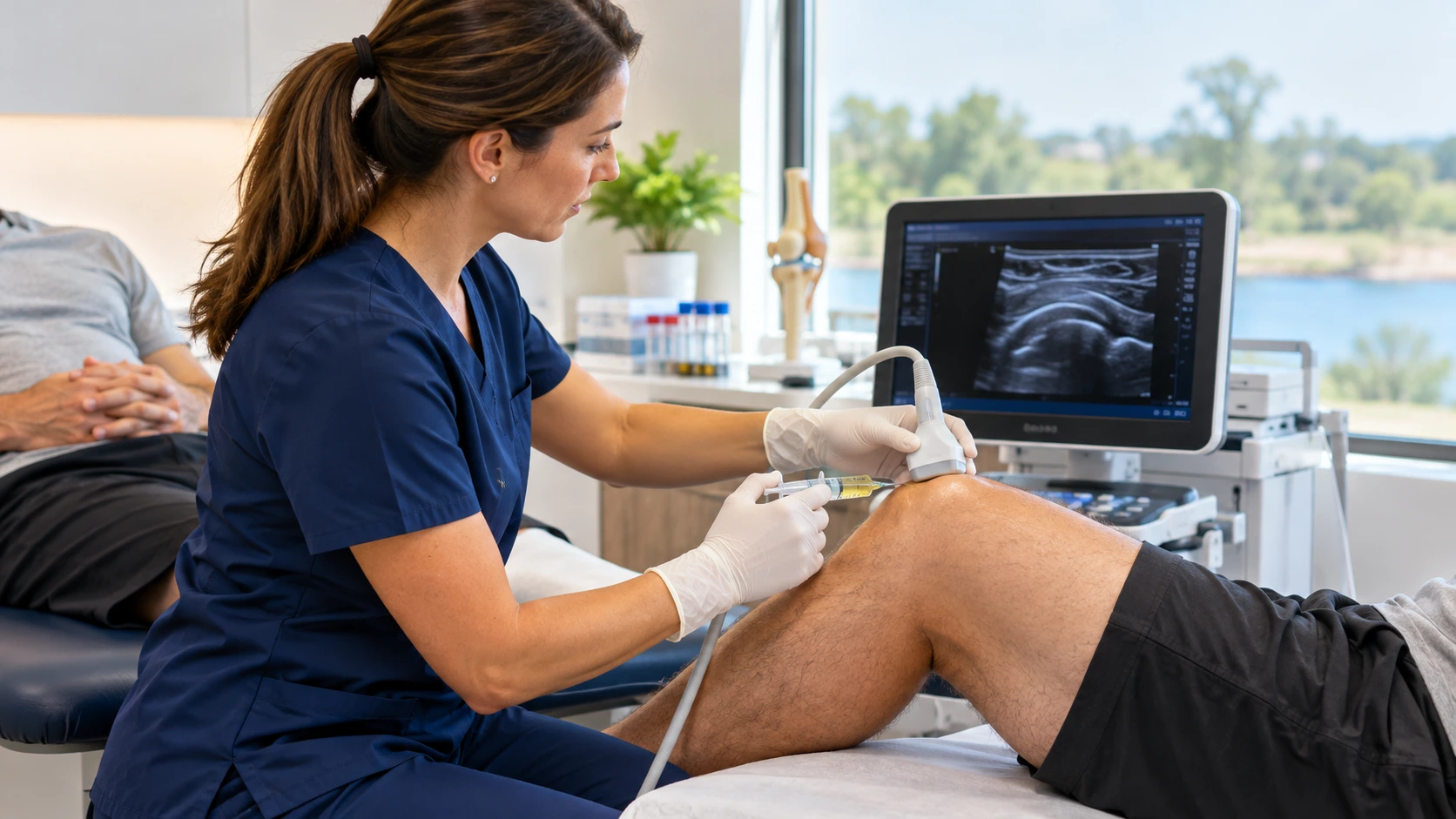
Regenerative medicine is a non-surgical approach that uses the body’s own healing tools, such as platelets, growth factors and signaling proteins, to support the repair of damaged joints, tendons and ligaments. At our regenerative medicine clinic in Chesapeake, VA, patients from Virginia Beach, Norfolk and Northeastern North Carolina use PRP injections and image-guided osteoarthritis care to ease pain, improve mobility and delay or avoid surgery.
How Does Regenerative Medicine Work?
Your body already knows how to heal. When a tendon tears or cartilage wears down, platelets rush to the area and release growth factors that call in repair cells. In chronic joint pain, that response slows down, and the tissue stays inflamed and weak. Regenerative medicine concentrates these natural healing signals and places them exactly where the damage is, using ultrasound or image guidance for accuracy. Instead of masking pain the way a cortisone shot or daily pain medication does, the goal is to support the tissue itself so the joint can move with less pain over time.
What Are the Main Types of Regenerative Medicine Treatments?
Most regenerative care in an outpatient clinic falls under orthobiologics, which are treatments made from natural biological substances. At Coastal Regen, options include:
- Platelet-rich plasma (PRP): a concentrate made from a small sample of your own blood, rich in growth factors that support tendon, ligament and joint repair. Learn more on our PRP injections page.
- Cell-derived and exosome-based injections: biologic products that carry signaling proteins into damaged tissue. Your provider will explain how these differ from PRP and whether they suit your goals.
- HyalRegen-CT: a proprietary approach that pairs image-guided lubricating gel injections with regenerative components for arthritic knees, described on our osteoarthritis treatment page.
- Supportive therapies: medical laser therapy, joint supplements and custom knee bracing that help calm inflammation and protect the joint while it heals.
What Conditions Can Regenerative Medicine Treat?
Regenerative injections are most often used for musculoskeletal pain that has not improved with rest, physical therapy or medication, including:
- Knee osteoarthritis and meniscus injuries
- Rotator cuff strain and shoulder degeneration
- Hip arthritis and hip bursitis
- Tennis elbow and golfer’s elbow
- Ankle instability, plantar fasciitis and chronic Achilles pain
- Hand and wrist arthritis
- Chronic back pain and post-surgical joint pain
What Are the Benefits of Regenerative Medicine?
Patients choose regenerative care because it fits between conservative care and surgery. Key benefits include:
Non-surgical: no incisions, no general anesthesia and no hospital stay.
Natural source: PRP comes from your own blood, so the risk of an allergic reaction is very low.
Minimal downtime: most patients return to normal daily activity within a day or two.
Longer-term focus: the aim is lasting tissue support rather than short-term numbing.
Fewer medications: many patients rely less on pain pills and repeated steroid shots.
Results vary by condition, age and severity, so an honest evaluation matters more than any promise.
Regenerative Medicine vs Traditional Pain Management
Traditional pain management often relies on anti-inflammatory pills, opioids, repeated cortisone shots and, eventually, surgery. These tools have a place, but they mostly control symptoms, and long-term use can carry real risks, from stomach and kidney problems to weakened cartilage. As a functional medicine and functional pain management clinic, we take a different path. We look for the source of your pain, support the damaged tissue with regenerative care, and address the inflammation, nutrition and lifestyle factors that keep joints hurting.
Who Is a Good Candidate for Regenerative Medicine?
You may be a good candidate if you have mild to moderate joint arthritis, a chronic tendon or ligament injury, or pain that has lasted more than a few months despite conservative care. It is also a strong option for active adults who want to delay a knee replacement or avoid surgery altogether. Certain health conditions, blood disorders and medications can affect eligibility, which is why every plan starts with a full review of your history and imaging.
What to Expect at a Regenerative Medicine Clinic in Chesapeake, VA
Your first visit is a thorough consultation with our board-certified nurse practitioner team, led by Laura Melsheimer, FNP-BC, who is trained in image-guided injections for the knee, shoulder, hip and ankle. We review your imaging, medical history and goals, explain which treatment fits, and answer every question before you decide. Most procedures are done in the office in under an hour. You can meet our team before your visit.
Regenerative Medicine Near Virginia Beach, Norfolk and Northeastern North Carolina
Our clinic is in the Greenbrier area of Chesapeake, a short drive from Great Bridge, Western Branch and Deep Creek, with easy access from I-64, I-264 and the Chesapeake Expressway. We regularly welcome patients from Virginia Beach, Norfolk, Moyock and Elizabeth City, as well as active duty service members, veterans and military families. Ready to find out if regenerative medicine is right for you? Book a consultation or call 757-297-6750.
Regenerative Medicine in Chesapeake, VA: Frequently Asked Questions
What is regenerative medicine in simple terms?
Regenerative medicine is a type of care that helps the body repair itself. Instead of covering up pain, it uses natural healing materials, such as concentrated platelets from your own blood, to support damaged joints, tendons and ligaments. The goal is to reduce pain, improve movement and help you stay active without surgery or long-term reliance on pain medication.
What is the difference between PRP and stem cell therapy?
PRP uses platelets and growth factors from your own blood to signal repair, while stem cell and cell-derived therapies use biologic products that carry signaling proteins into damaged tissue. PRP is the most widely studied option for joint pain. Your provider will explain each option, how it is prepared and which one best matches your condition and goals.
Is regenerative medicine safe?
PRP is considered low risk because it comes from your own blood. The most common side effects are temporary soreness, swelling and stiffness at the injection site for a few days. Infection and nerve irritation are rare. Image guidance improves accuracy, and a full health review before treatment helps make sure the procedure is a safe fit for you.
How long does it take for regenerative medicine to work?
Regenerative treatments work gradually because they support a natural healing process. Many patients notice improvement within three to six weeks, with continued progress over three to six months. Tendon injuries often take longer than joint arthritis. Read our guide on how long PRP takes to work for a week-by-week recovery timeline.
How long do regenerative medicine results last?
Results vary, but many patients with knee osteoarthritis report relief lasting six to twelve months or longer after PRP. Some people benefit from a follow-up injection to maintain results. Staying active, managing weight and following your aftercare plan all help extend the benefits of treatment.
Can regenerative medicine help me avoid knee replacement surgery?
For many people with mild to moderate knee arthritis, regenerative care can reduce pain and improve function enough to delay or avoid surgery. It is less likely to help bone-on-bone arthritis with severe deformity. Explore every option in our guide to alternatives to knee replacement.
Is regenerative medicine covered by insurance?
Coverage depends on your plan and the treatment. Coastal Regen is in-network with TRICARE, and some TRICARE patients may qualify for PRP coverage for knee osteoarthritis or tennis elbow when conservative care has not worked. Our office team will verify your benefits before treatment so you know what to expect.
Does a regenerative injection hurt?
- Do I need a referral for laser therapy? No, you can schedule a consultation directly with our team.
- What should I wear to my appointment? Loose, comfortable clothing that allows easy access to the treatment area works best.
- Can I combine laser therapy with a regenerative injection the same day? Your Nurse Practitioner will let you know what sequencing makes sense for your visit.
- Is laser therapy safe for older adults? It is generally well tolerated across age groups, though your provider will review your full health history first.
Do you treat patients from Virginia Beach, Norfolk and North Carolina?
Yes. Our Chesapeake clinic serves patients across Hampton Roads, including Virginia Beach, Norfolk, Portsmouth and Suffolk, along with Moyock and Elizabeth City in Northeastern North Carolina. Most patients reach us in five to fifty minutes depending on where they start.
How do I know if I am a candidate for regenerative medicine?
The best way to find out is a consultation. Your provider will review your imaging, medical history, medications and goals, then explain whether PRP or another regenerative treatment fits your condition. If another approach would serve you better, you will hear that too.
What is the difference between functional medicine and regenerative medicine?
Functional medicine looks at the whole person, including nutrition, inflammation, hormones, sleep and lifestyle, to find the root causes of pain and poor health. Regenerative medicine focuses on supporting the repair of a specific damaged joint, tendon or ligament. At Coastal Regen, the two work together, so your injection plan is backed by a whole-body approach that helps results last longer.
What should I bring to my first regenerative medicine appointment?
Bring any recent X-rays, MRI or ultrasound reports, a list of your current medications and supplements, and notes about past treatments such as physical therapy or cortisone shots. Also bring your insurance card. This information helps your provider recommend the right treatment at your first visit and avoids delays in starting care.