
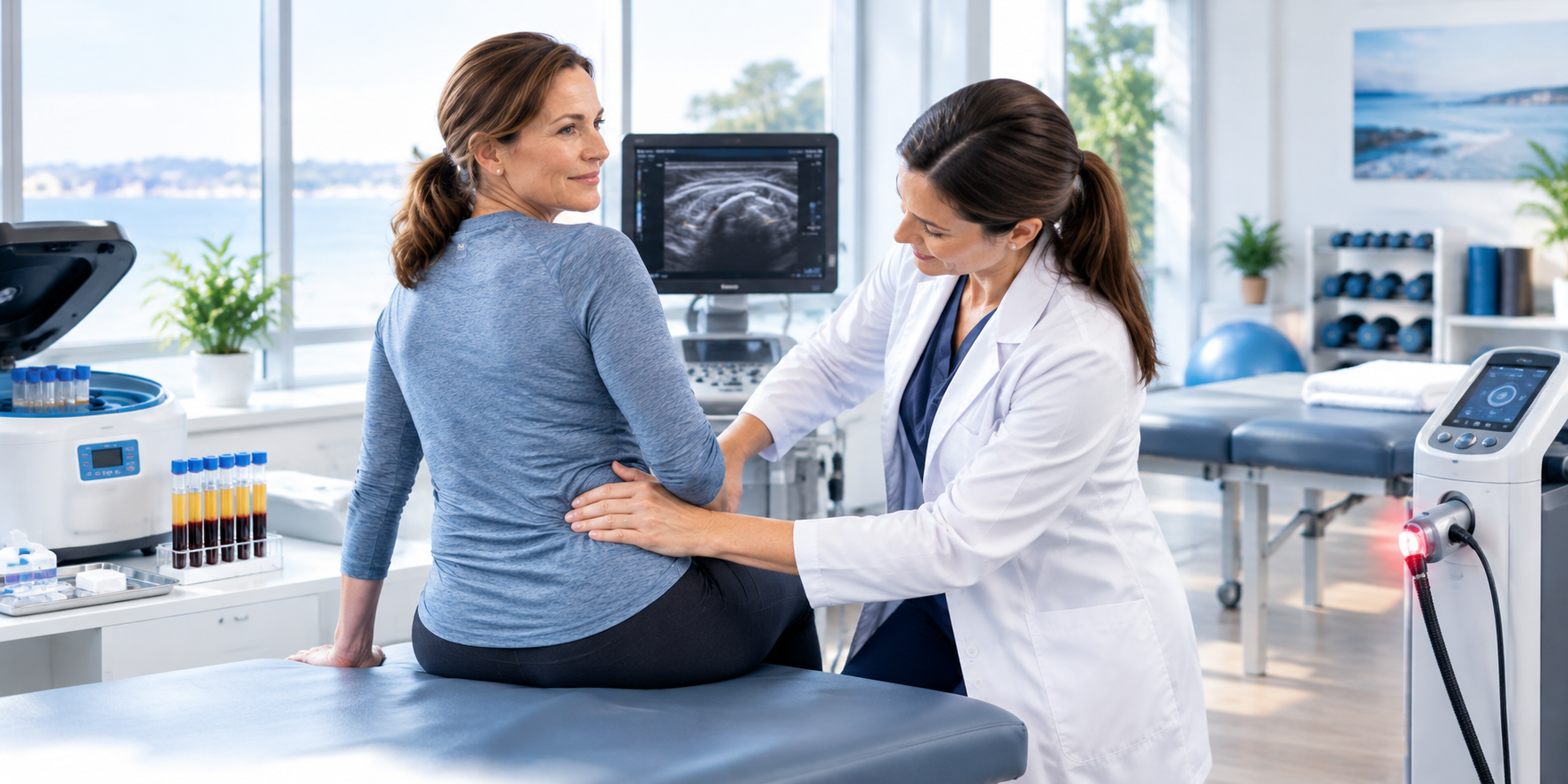
Regenerative medicine for back pain uses treatments such as PRP injections to support healing in damaged ligaments, facet joints and soft tissues that cause chronic lower back pain. Paired with laser therapy, targeted rehab and functional medicine, it offers a non-surgical option for patients who want relief without long-term pain medication. Our regenerative medicine clinic in Chesapeake, VA provides image-guided PRP injections and medical laser therapy for patients across Hampton Roads.
What Causes Chronic Lower Back Pain?
Back pain becomes chronic when it lasts more than three months. Common causes include:
Facet joint arthritis: wear and tear in the small joints that link each vertebra.
Sacroiliac (SI) joint dysfunction: irritation where the spine meets the pelvis.
Ligament and muscle strain: overstretched or weakened soft tissue that never fully healed.
Degenerative disc disease: age-related changes in the cushions between vertebrae.
Postural and repetitive strain: long hours sitting, lifting or standing on duty.
Many of these structures have a limited blood supply, which is one reason back injuries can be slow to heal. For many patients, more than one source contributes to pain at the same time, so an accurate diagnosis is the first and most important step toward lasting relief. Active duty service members, shipyard workers and anyone who lifts, bends or wears heavy gear daily are especially prone to chronic lower back strain.
How Does Regenerative Medicine Help Back Pain?
Regenerative treatments aim to support the tissues that are causing pain rather than only blocking the pain signal. Platelet-rich plasma concentrates growth factors from your own blood and delivers them precisely to irritated ligaments, facet joints or the SI joint using image guidance. These growth factors may help calm chronic inflammation, strengthen soft tissue and improve stability over time. Learn the basics in our guide to what regenerative medicine is.
Non-Surgical Back Pain Treatments We Offer
PRP Injections for Back Pain
PRP may help patients with facet joint pain, SI joint dysfunction and chronic ligament strain who have not found lasting relief with medication or therapy. Many patients notice change within six to twelve weeks.
Medical Laser Therapy
Laser therapy reduces inflammation and muscle tension in the lower back. It is drug-free and comfortable, and it pairs well with injections and rehab.
Trigger Point and Anti-Inflammatory Injections
Tight muscle knots in the back can keep pain cycling. Trigger point and anti-inflammatory injections offer targeted short-term relief, making it easier to stay active and complete your rehab.
Functional Medicine and Wellness Support
As a functional medicine clinic, we look at nutrition, inflammation, weight and sleep, all of which affect back pain. Medical weight loss, IV therapy and supplements support whole-body recovery. Explore our longevity and wellness treatments.
Non-Surgical Rotator Cuff Treatment Options
PRP Injections for Rotator Cuff Injuries
Platelet-rich plasma delivers concentrated growth factors directly to the damaged tendon under image guidance. PRP aims to support tendon healing and reduce chronic inflammation, which is why it is a popular option for partial tears and chronic tendinopathy that have not responded to rest and therapy.
Medical Laser Therapy
Medical laser therapy uses light energy to reduce inflammation, increase circulation and ease pain in the shoulder. It is drug-free and comfortable. Read more in our laser therapy for chronic pain guide.
Anti-Inflammatory and Trigger Point Injections
For short-term relief of muscle knots and inflamed tissue around the shoulder, targeted injections can calm pain so you can participate in rehab. Learn more about trigger point and anti-inflammatory injections.
Physical Therapy and Home Exercise
Strengthening the rotator cuff and shoulder blade muscles improves joint stability and takes pressure off the injured tendon. Consistent, guided exercise is a core part of every non-surgical plan, and gentle stretching helps prevent a stiff, frozen shoulder while the tendon heals.
Activity Changes and Recovery Support
Short-term changes, such as avoiding heavy overhead lifting and adjusting your sleep position, give the tendon space to heal. IV therapy and supplements can support overall recovery.
Regenerative Medicine vs Steroid Injections and Surgery for Back Pain
Epidural and facet steroid injections can provide fast relief, but the effect often fades in weeks to months, and steroid use is usually limited each year. Spine surgery may be necessary for nerve compression, severe weakness or structural instability, but it carries longer recovery and risk. Regenerative care sits between the two, offering a non-surgical path focused on longer-term tissue support for the right candidate.
What to Expect During a Regenerative Back Pain Treatment
Your care begins with a detailed consultation, including a review of your symptoms, posture, work demands, past treatments and any X-ray or MRI results. A hands-on exam helps pinpoint whether the facet joints, sacroiliac joint, ligaments or muscles are driving your pain. If PRP is a good fit, a small blood sample is drawn and processed into PRP during the same visit. After numbing the skin, your provider places the injection under image guidance, and most patients go home the same day. Light activity is encouraged, followed by a gradual return to core strengthening. Follow-up visits track pain, mobility and daily function so your plan can be adjusted as you heal.
Who Is a Good Candidate for Regenerative Back Pain Treatment?
You may be a good candidate if you have:
- Back pain lasting more than three months
- Pain linked to facet joints, the SI joint or ligaments
- Limited relief from medication, therapy or steroid shots
- A goal of avoiding surgery and long-term opioid use
Back pain with leg weakness, numbness in the groin area or loss of bladder or bowel control needs emergency care right away.
Back Pain Treatment Near Virginia Beach, Norfolk and Elizabeth City
Coastal Regen is in the Greenbrier area of Chesapeake, close to I-64 and the Chesapeake Expressway, and serves Virginia Beach, Norfolk, Portsmouth, Suffolk, Moyock and Elizabeth City. We are in-network with TRICARE and proud to care for military families. Book a back pain consultation or call 757-297-6750.
Regenerative Medicine for Back Pain: Frequently Asked Questions
Can PRP help lower back pain?
PRP may help lower back pain caused by facet joint arthritis, sacroiliac joint dysfunction and chronic ligament strain. Research is still growing, but studies show encouraging improvements in pain and function for selected patients. A thorough exam and imaging review help determine whether your back pain is a good match.
How long does PRP take to work for back pain?
Back pain often responds more slowly than knee arthritis. Many patients notice improvement six to twelve weeks after PRP, with continued gains for several months. Following your rehab plan and staying active within limits help you get the most from treatment. See our PRP recovery timeline.
Is regenerative medicine better than an epidural steroid injection?
They serve different purposes. Epidural steroid injections can quickly calm nerve-related pain, but the effect often fades. Regenerative treatments aim for longer-term support of ligaments and joints. The better choice depends on the source of your pain, which your provider identifies during your evaluation..
What back conditions can regenerative medicine treat?
RotatRegenerative medicine is most often used for facet joint pain, sacroiliac joint dysfunction, chronic ligament and muscle strain, and some cases of degenerative disc-related pain. It is not a substitute for surgery when there is severe nerve compression or spinal instability.or cuff tendinitis often improves in six to twelve weeks with consistent care. Partial tears may take three to six months to reach full benefit. Following your rehab plan and avoiding re-injury are the biggest factors in how fast you recover.
Is a PRP injection in the back painful?
A local numbing medication is used, and image guidance helps the provider place each injection accurately. Most patients feel pressure and mild discomfort. Soreness for a few days afterward is common and usually managed with rest, ice and acetaminophen.
How many PRP injections will I need for back pain?
Many patients need one to three PRP injections, depending on how many areas are involved and how the tissue responds. Your provider will build a plan around your imaging and reassess your progress at follow-up visits before recommending more treatment.
Can regenerative medicine help me avoid back surgery?
For many people with chronic back pain from joints and ligaments, non-surgical care can relieve pain enough to avoid or delay surgery. Surgery may still be necessary for severe nerve compression, progressive weakness or instability, and we refer to a spine surgeon when it is
What lifestyle changes help chronic back pain?
Yes. Our Chesapeake clinic treats rotator cuff and shoulder pain for patients from Norfolk, Virginia Beach, Portsmouth, Suffolk, Moyock and Elizabeth City, including many active duty and retired military patients covered by TRICARE.
Is regenerative back pain treatment covered by insurance?
Coverage varies by plan and treatment. Coastal Regen is in-network with TRICARE, and our office team verifies your benefits and explains any costs before treatment so there are no surprises.
Do you treat back pain for patients from Virginia Beach and Elizabeth City?
Yes. Our Chesapeake clinic treats chronic back pain for patients from Virginia Beach, Norfolk, Portsmouth, Suffolk, Moyock and Elizabeth City, with easy access from I-64, I-264 and the Chesapeake Expressway.
Can regenerative medicine help sciatica?
Sciatica is caused by irritation of the sciatic nerve, often from a disc or narrowing in the spine. Regenerative care may help when nearby joints or ligaments contribute to the pain, but true nerve compression often needs a different approach. A careful exam helps identify the source so you get the right treatment for your symptoms.
Is it safe to exercise with chronic back pain?
In most cases, yes. Gentle walking, core strengthening and stretching usually help chronic back pain more than bed rest. Avoid heavy lifting and twisting during flare-ups, and progress slowly. Your provider can recommend safe exercises that support your treatment plan and protect your spine as it heals.
Does sitting all day make back pain worse?
Long periods of sitting can increase pressure on the lower back and tighten the hip flexors, which often worsens chronic back pain. Standing up and moving for a few minutes every 30 to 45 minutes, using lumbar support and setting your screen at eye level all help reduce strain throughout the workday.
How is regenerative back pain treatment different from a chiropractor?
Chiropractic care focuses on spinal adjustments and manual therapy to improve movement. Regenerative medicine uses image-guided injections such as PRP to support damaged joints and ligaments directly. Many patients benefit from both, and our team can coordinate care so each approach supports the other.