
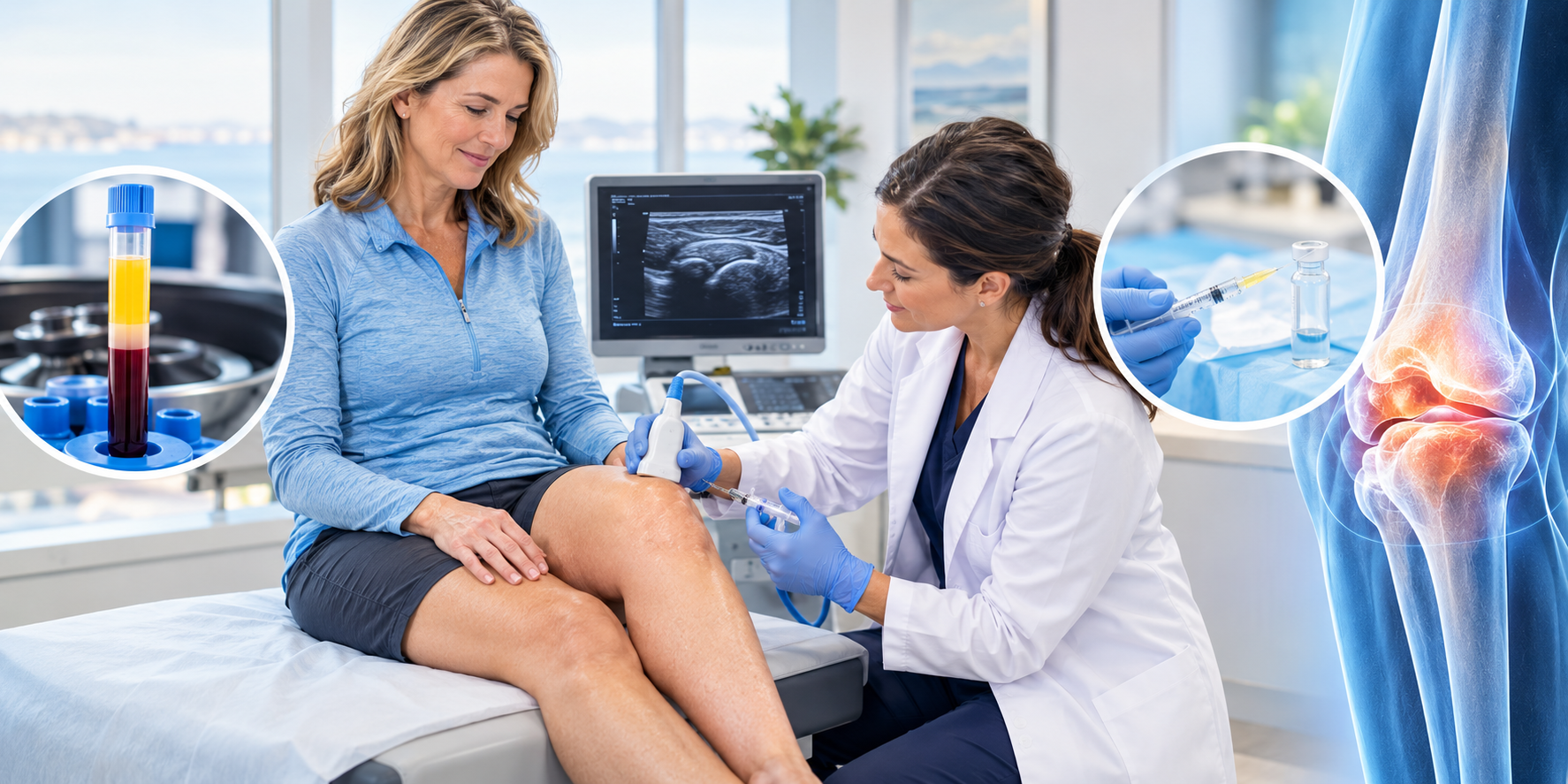
PRP injections and cortisone shots both treat knee pain, but they work differently. Cortisone is a steroid that reduces inflammation quickly, often within days, with relief that usually fades in weeks to a few months. Platelet-rich plasma works gradually, over several weeks, and research shows longer-lasting relief for knee osteoarthritis. Our regenerative medicine clinic in Chesapeake, VA offers PRP injections and hyaluronic acid gel injections to help you choose the right fit.
What Is the Difference Between PRP and Cortisone Injections?
The main difference is purpose. A cortisone injection, also called a steroid shot or corticosteroid injection, is an anti-inflammatory medication that calms swelling and pain inside the joint. A PRP injection is a regenerative treatment made from a concentrate of your own platelets, which release growth factors that support tissue repair and help balance the joint environment. Cortisone treats symptoms. PRP aims to improve the joint itself.
How Does a Cortisone Shot Work for Knee Pain?
Cortisone suppresses inflammation fast, which is why many people feel better within 24 hours to a week. It is useful for sudden flare-ups and for getting through a painful stretch. The trade-off is duration. Relief commonly lasts a few weeks to about three months, and repeated steroid injections may weaken cartilage and soft tissue over time. For that reason, most providers limit cortisone to a few injections per year in the same joint.
How Does a PRP Injection Work for Knee Pain?
For PRP, we draw a small amount of your blood, spin it in a centrifuge to concentrate the platelets, and inject the PRP into the knee under image guidance. Because PRP works with your body’s healing process, improvement is gradual, usually starting at three to six weeks and building over three to six months. Many patients need one to three injections, depending on the severity of their arthritis.
PRP vs Cortisone: Which Is Better for Knee Osteoarthritis?
Regenerative injections are most often used for musculoskeletal pain that has not improved with rest, physical therapy or medication, including:
What Are the Benefits of Regenerative Medicine?
PResearch comparing the two for knee osteoarthritis points in a consistent direction:
- Speed of relief: cortisone works faster in the first few weeks.
- Duration of relief: PRP tends to outperform cortisone at three, six and twelve months.
- Joint function: studies show greater gains in stiffness and function with PRP over time.
- Long-term joint health: PRP does not carry the cartilage concerns linked to repeated steroid use.
In short, cortisone is a short-term tool, while PRP is a longer-term strategy for people who want lasting relief and to stay active
What Are the Side Effects of PRP and Cortisone Injections?
Both injections are considered safe when performed by a trained provider, but their side effects differ:
- Cortisone: a temporary pain flare in the first day or two, raised blood sugar in people with diabetes, skin thinning or lightening at the injection site, and possible cartilage and tendon weakening with frequent use.
- PRP: soreness, swelling and stiffness for two to three days as the healing response begins. Because PRP comes from your own blood, the risk of an allergic reaction is very low.
- Both: a small risk of infection, bleeding or bruising, which careful sterile technique keeps rare.
Why Image Guidance Matters for Knee Injections
Where the medication lands matters as much as what is injected. Image-guided injections allow your provider to see the joint space and place PRP, gel or cortisone precisely, rather than relying on feel alone. Accurate placement can improve results and comfort, which is why our team uses image guidance for knee, shoulder, hip and ankle injections
Where Do Hyaluronic Acid Gel Injections Fit In?
Hyaluronic acid, often called gel or lubricating injections, adds cushioning to the joint fluid and can ease arthritis pain for several months. It is a strong option for many patients, including Medicare patients, since gel injections are often covered for knee osteoarthritis when criteria are met. Our proprietary HyalRegen-CT approach combines image-guided gel injections with regenerative components. Read our hyaluronic acid and Medicare guide to learn more.
Which Knee Injection Is Right for You?
Coastal Regen is located in the Greenbrier area of Chesapeake and welcomes patients from Virginia Beach, Norfolk, Portsmouth, Suffolk, Moyock and Elizabeth City. We are in-network with TRICARE and serve many military families across Hampton Roads. To compare your options in person, schedule a consultation or call 757-297-6750.
Knee Injections for Patients in Chesapeake, Virginia Beach and Norfolk
Coastal Regen is located in the Greenbrier area of Chesapeake and welcomes patients from Virginia Beach, Norfolk, Portsmouth, Suffolk, Moyock and Elizabeth City. We are in-network with TRICARE and serve many military families across Hampton Roads. To compare your options in person, schedule a consultation or call 757-297-6750.
PRP vs Cortisone for Knee Pain: Frequently Asked Questions
Is PRP better than cortisone for knee pain?
For knee osteoarthritis, research shows PRP generally provides longer-lasting pain relief and better joint function than cortisone after the first few months. Cortisone usually works faster but fades sooner. The better option depends on whether you need fast short-term relief or a longer-term strategy, and on your health history.
How long does a cortisone shot last in the knee?
A cortisone shot in the knee usually provides relief for a few weeks to about three months, though some people get longer relief. Because repeated steroid injections may affect cartilage over time, most providers limit them to three or four per year in the same joint..
How long does a PRP injection last in the knee?
Many patients with knee osteoarthritis report relief for six to twelve months after PRP, and some longer. Results depend on arthritis severity, body weight, activity level and the number of injections. A follow-up injection can help maintain results when pain begins to return.
Can I get PRP after a cortisone injection?
Yes, but timing matters. Steroids can reduce the healing activity that PRP depends on, so providers often recommend waiting several weeks after a cortisone shot before PRP. Your provider will review your recent injections and set the safest timeline for your knee.
Is PRP painful compared to a cortisone shot?
PRP can cause more soreness than cortisone for the first two to three days because it triggers a healing response. A local numbing medication keeps the injection itself comfortable. Ice, rest and acetaminophen usually manage the short-term soreness well.
Which knee injection is covered by Medicare?
Medicare often covers cortisone and hyaluronic acid gel injections for knee osteoarthritis when medical criteria are met. PRP is generally not covered by Medicare. Our office team will check your benefits, including Red, White and Blue card coverage, before your visit.
Does TRICARE cover PRP injections?
Coastal Regen is in-network with TRICARE, and some TRICARE patients may qualify for PRP coverage for mild to moderate knee osteoarthritis or tennis elbow when conservative treatments have not worked. Our team will verify your coverage and explain any costs upfront.
Can PRP rebuild cartilage in the knee?
PRP is not proven to regrow lost cartilage. Research shows it can reduce pain, improve joint function and support a healthier joint environment, which may slow the progression of symptoms. Its main value is meaningful pain relief and better movement without surgery.
How many PRP injections will I need for my knee?
Most patients need one to three PRP injections spaced a few weeks apart. Mild arthritis may respond to a single injection, while moderate arthritis often benefits from a series. Your provider will recommend a plan based on your imaging and response.
Who should not get PRP or cortisone injections?
People with active infections, certain blood or platelet disorders, some cancers, or those taking specific blood thinners may not be candidates for PRP. Cortisone may need caution in people with diabetes because it can raise blood sugar. A full health review comes first so your provider can choose the safest injection for your knee and overall health.
Can PRP and hyaluronic acid be combined?
Yes. Some patients benefit from combining hyaluronic acid gel, which lubricates and cushions the joint, with regenerative components that support the tissue. Our proprietary HyalRegen-CT approach is built on this idea for arthritic knees. Your provider will explain whether a combined plan makes sense for your arthritis stage and goals.
How much does a PRP injection for knee pain cost?
The cost of PRP depends on the joint being treated, the number of injections and whether image guidance is used. Because PRP is often not covered by commercial insurance or Medicare, our team gives you clear pricing upfront and checks TRICARE eligibility before your treatment, so you can plan with confidence.
Where can I get PRP or gel injections for knee pain near me in Hampton Roads?
Coastal Regen offers image-guided PRP, hyaluronic acid gel and HyalRegen-CT knee injections at our clinic in the Greenbrier area of Chesapeake. We serve patients from Virginia Beach, Norfolk, Portsmouth, Suffolk, Moyock and Elizabeth City, and our team can usually schedule a consultation quickly.